
What to do with your hands when they don’t belong in your pant pockets and folded arms are equally inappropriate, whether out of respect or to create a good impression.
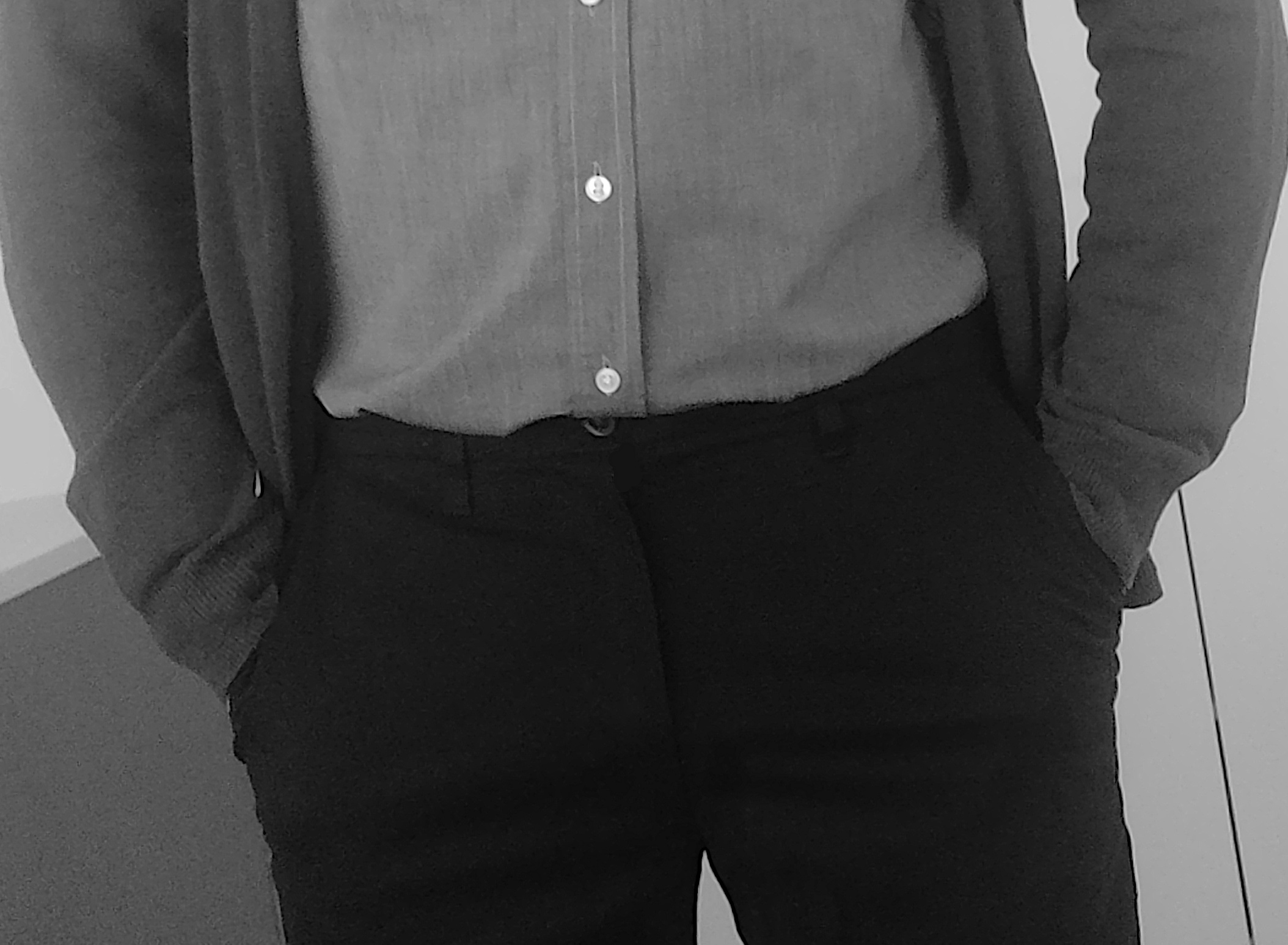 Source: The Neat and Tidy Man
Like most men I know and observe, my default standing position is with my hands in my pockets or my arms folded. It’s comfortable and part of normal masculine behavior.
In fact, most of us practiced it as boys when we donned our father’s old clothes in games of dress-up. We recognized it as the posture of a grown man.
But it’s not always appropriate. And with nothing better to do with your hands, you suddenly become aware of them, which is when the awkwardness begins.
When Are Hands in Pockets Inappropriate
There’s nothing inherently wrong with putting your hands in your pockets. It’s a typical male resting position, indicating that you’re relaxed and comfortable. You may do it subconsciously while waiting, conversing, or walking. It doesn’t signal anything significant, and nobody gives it a second thought.
It only becomes inappropriate during formal, solemn, ceremonial, or commemorative occasions, like religious services, court hearings, or job interviews. Most of us know this instinctively.
But what about everyday situations?
You may find yourself avoiding the hands-in-pockets stance when speaking to somebody of higher status, authority, or seniority. This is a behavioral relic of older social codes and the military, where a relaxed attitude was deemed improper when interacting with authority.
In military branches, the ban on hands in any pockets while in uniform—whether pants or coat—relates to readiness, proper bearing, and safety.
In civilian workplaces, it’s more about appearing present and attentive.
How Pocket Style Influences Stance
Pocket style affects how hands‑in‑pockets reads.
- Scoop pockets are the horizontal style usually found on jeans, chinos, and some fitted dress pants. Placed higher than slanted pockets, they’re often tight enough to keep the back of the hand visible and the posture upright. This allows you to look relaxed but still attentive.
- Slanted pockets, which are usually deeper and more common on dress or suit pants, let the hand sink further. This loosens the silhouette, which can make you seem nonchalant.
Although you should never have your hands in your pockets for formal or solemn events, hooking your thumbs into scoop pockets goes unnoticed most of the time. Doing the same with slanted pockets—which are lower—still appears too relaxed if you plan on creating a good impression.

What to Do When Hands-in-Pockets Is Not Allowed
For my entire working life, I’ve worked front-of-house in hospitality or in corporate settings—which is what I do now. In one, I was constantly dealing with guests; in the other, I work closely with senior management.
In roles like these, there may be moments of non-work-related banter and a more laid-back stance. But it soon changes when the boss walks in or a guest arrives. It’s for the same unspoken reason that you never have your hands in your pockets in front of these people.
So what do you do instead without looking like a plank of wood?
Here are five ways to avoid awkwardness when pockets aren’t appropriate.
1. Hands Behind Your Back
This posture has the odd dual character of deference and authority. It’s the default stance of the butler, the footman, the bygone British schoolmaster, and the military officer inspecting the troops.
That’s why many modern men, myself included, resist it; it can feel rather old-fashioned and out of character.
Yet it still works in the right context, perhaps at a funeral, a memorial service, or any setting where a reserved posture is called for.
Place your hands behind your back when you want to appear composed and unobtrusive—but only if it feels natural.

2. Clasped Hands
This refers to a relaxed hand clasp resting at the navel. I loosely clasp the back of my right hand with my left thumb.
It’s a neutral, masculine stance, suitable for addressing groups in talks and discussions.
The interlocking-finger version also works but can feel more rigid.

3. Hands Neatly in Front, Below the Waist
Clasp your hands lightly below the waist for photos or in situations where you need to appear attentive over extended periods.
This was my go-to when I waited tables back in the day.
It’s a job that literally involves a lot of waiting—for diners to arrive, to decide on a beverage, to peruse the menu, and to eat. This is especially true of large functions where all guests eat simultaneously while you watch for glasses that need refilling.
A formal yet relaxed posture, it’s more comfortable for the modern man than keeping his hands behind his back.

4. Hold an Object
This is mainly for presentations and seminars. You could put your hands in your pockets, but whether you actually would depends on who is present. If your CEO is in the room, you may feel compelled not to.
Let’s suppose this is the case. Then the simplest way to occupy your hands is to give them a job.
Holding a pen, a pointer, or a clicker is practical and avoids not only the dilemma of idle hands; a prop can make you feel more confident. Pick up a pen and try it right now. Why do you think singers hold a microphone? They could just as easily leave it on the stand.

5. One Hand in Your Pocket
Relaxed but still elegant, this works well in less formal situations without coming across as nonchalant.
It’s perfectly acceptable for a presentation where you might hold a clicker in the other hand. Or at an after-work party if you want to feel more laid-back—your free hand is for your drink.
For me, it’s subconscious. I’ll take my hand out of the pocket to gesticulate, then put it back when I’m finished. I’ll also swap hands now and again.

Walking With Your Hands in Your Pockets
Do you keep your hands in your pockets when walking, whether your trousers, coat, or jacket? Then you’ve probably noticed that when this isn’t possible, such as walking along the beach in trunks with no pockets at all, you suddenly become conscious of your hands and how your arms swing.
The result is hesitancy and a break in rhythm.
Reset by twisting your arms inward so the backs of your hands face forward. It restores the natural swing almost immediately. And as a desirable side effect, your arms appear slightly thicker from the front.
Stop treating hands‑in‑pockets or folded arms as your default. They may be comfortable, but they’re not always appropriate. Try alternatives to broaden your range, giving you the freedom to match your posture to the occasion without awkwardness.
© 2026 J. Richardson


