
Discover why it’s nearly always better to shave before showering—and how to keep your skin in good condition if you shave afterward.

According to generic advice, it’s generally best to shave after or during a shower. The steam and warm water soften the follicles and open the pores, which helps the razor glide smoothly. This significantly lowers the risk of cuts, razor burn, and ingrown hairs.
In reality, the part of the hair being shaved is the shaft, not the follicle. Pores have no muscles and are not able to open and close. Even if they could, it would have no impact on the shaving process. And whether you’ve wet your beard at the sink or in the shower, the razor glides in exactly the same way.
Although temperature and routine do make a difference, it’s not as we’ve been led to expect. A shave before showering offers a few advantages, and shaving afterward a few disadvantages.
Note
This article is about wet shaving. If you’re dry shaving, do so before showering or on perfectly dry skin. Use a pre-electric lotion or a light dusting of barber powder for glide and to reduce the need for stretching.
Why Post-Shower Shaving Is Less Beneficial
Routine
If you want a streamlined routine, shaving after you shower is counterproductive. Tasks like brushing your teeth and shaving require a clean-up, so it makes sense to deal with them before showering. You can then be sure that your face is completely free of soap and shaving debris, reducing the risk of irritation.
This is why men favoring cold showers and cold-water shaving are more likely to shave first: their only deciding factor is the post-shave clean-up and not heat.
Heat
It takes just two or three minutes of exposure to steam and warm water to soften and slightly swell the skin, making it more absorbent. This is ideal for applying skincare products, but less so for shaving.
Softer, puffier skin increases the need for stretching and multiple passes, adding to the risk of nicks, ingrown hairs, and razor burn. Apart from that, morning shavers are already a little puffy from sleep—which is why it makes sense to have a cup of coffee before going to the bathroom.
And unless you have an anti-fog mirror, condensation makes it harder to see what you’re doing.
Why Do Barbers Use Heat?
Your barber uses a damp, warm towel because it quickly prepares the beard for lathering without saturation—warmth allows moisture to penetrate the whiskers fractionally faster. Aside from that, a professional shave should feel comfortable and therapeutic.
Even if the heat of the towel does cause the skin to soften and swell slightly, barbers compensate with perfect razor angles and the ability to gauge stretch without damage.
How to Compensate for a Post-Shower Shave
Cooling the Beard
Unlike barbers, most men have neither the time nor the skill to use a straight razor, which is the perfect tool for achieving flawless angles. And if you enjoy a warm, steamy shower before shaving, you’re unlikely to spoil the fun by placing a chilled washcloth on your beard for five to 10 minutes.
You could, however, keep the blade cool by rinsing it in cold rather than warm water, which cools the skin at the point of contact. It won’t fully reverse the effect of hot showering, but it restores a degree of firmness.
The Safety Razor
Using a safety razor also helps. Unlike multi-blade cartridges, it cuts at surface level and not below it, making gentle stretching less damaging.
But the most effective countermeasure is shaving oil.
Shaving Oil
A further ancient fallacy is that the skin must be cleansed or even exfoliated before shaving—another reason many men take a shower first.
Your skin is already swollen from sleep and heat, and now you’re supposed to strip away its sebum through cleansing, which disrupts glide even more and leaves you open to the irritating effects of soap-based lubricants.
Shaving oil solves these issues. It provides glide and creates a barrier.
The sunflower oil in your pantry works as well as any commercial shaving oil (also labeled “pre-shave oil”). You can either use it beneath your regular shaving cream or—if you’re using a cartridge razor—as a stand-alone lubricant.
By the way: A pre-shave cleanse is only necessary for real grime, such as coal dust, soot, and grease. Sebum and leftover skincare products aid glide and don’t block the razor.
If you think your face needs exfoliating before shaving, invest in a shaving brush. Unlike a facial scrub, it can be used daily without soreness. But even without a brush, the blade alone works as an exfoliant and cleanser.
Cleansing After a Post-Shower Shave
So, you’ve cleansed your face in the shower, perhaps given it an exfoliating scrub, then shaved. But that’s not the end of it.
Unlike men on TV and in movies, you can’t simply wipe away the remaining lather with a towel and call it a day. It would be like soaping yourself down and not bothering to rinse.
Splashing with cool or cold water should be enough to prevent dryness and irritation, but to clarify and prepare for skincare products, finish with micellar water. It removes debris without behaving like a second (or third) face wash. Simply apply it to a cotton pad and swipe over your face.
It’s also ideal if you shave without showering at all.
The Advantages of the Pre-Shower Shave
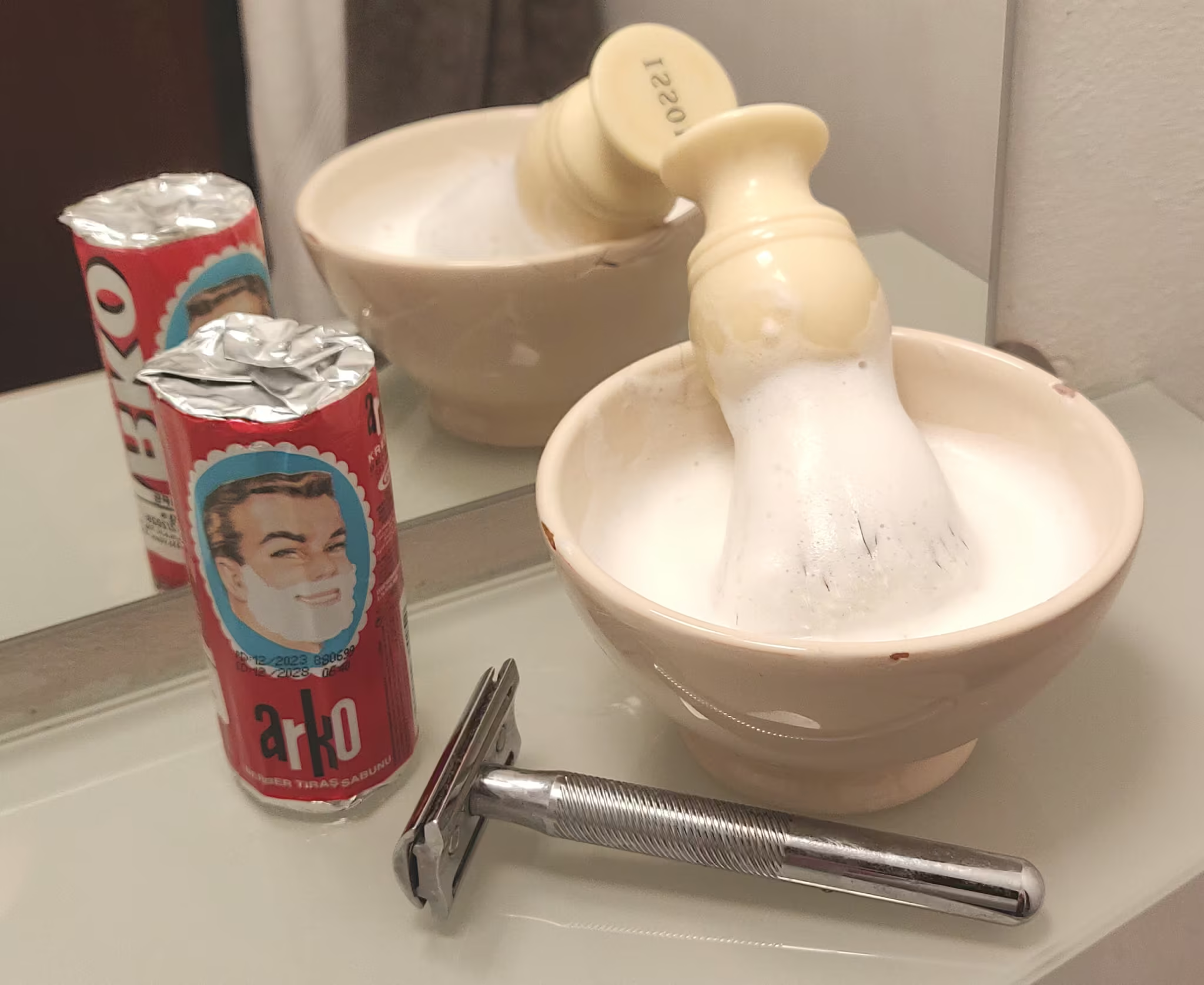
In exploring the disadvantages of shaving after a shower, the advantages of shaving before speak for themselves. Let’s recap.
➜ Your Routine Is More Efficient
The most convenient and time-saving grooming routine is shave → shower → skincare. The shower removes all lather and debris, acting as a final rinse before applying products.
➜ Your Natural Oils Are Still Intact
Because you haven’t stripped away excess sebum and leftover moisturizer, you get glide without the need for shaving oil.
➜ Your Skin Is Firmer and Less Swollen
A warm shower only makes morning puffiness worse. Firmer skin gives the razor a stable, resistant surface. It means less stretching and fewer passes, which lessens the risk of irritation and ingrown hairs.
➜ Improved Visibility
With no condensation, you can concentrate on shaving instead of wiping the mirror. This ensures a more relaxed shave and fewer nicks.
Shaving first is the cleaner routine. It allows for better glide and healthier skin while saving time. But whether you shower first because of a grime‑heavy job or out of personal preference, there are ways to keep your skin in good condition. It’s ultimately a matter of understanding the mechanics of the skin rather than relying on outdated advice that we’re all too familiar with.
© 2026 J. Richardson


