
Whether for personal hygiene, to improve skin, ease muscles, or wind down, here’s the masculine way to bathe using additives you already own.
 Source: Pexels
We don’t hear much about it these days, but men do take baths.
Growing up in the UK during the 1970s, we didn’t have showers. We washed at the sink with a washcloth. The tub was only for a deeper cleanse a couple of nights a week, and always on Sundays in preparation for the week ahead.
In spite of the glaring fluorescent strip and blaring radio, the experience was still therapeutic—a word we seldom used at the time. We associated bathtime more with hygiene than health.
Take my father, for example. I don’t think he’d ever heard of essential oils or colloidal oatmeal. Engulfed in pipe smoke and nursing a scotch, he’d soak in my Mr. Bubble until the water cooled and he looked like a prune. But he’d always emerge feeling better than when he went in: clean, relaxed, and ready for a restful night’s sleep.
In other words, a bath will always make you feel good if it’s pleasurable. Like smoking a pipe, it’s about slow-paced enjoyment. Other than cleaning the tub after you’ve finished, no part of it should feel like a disciplined routine, even when its sole intended purpose is personal hygiene rather than relaxation.
But the fun vanished when the media rebranded bathing as a ritualistic self-care activity—and moreover, a strictly feminine one. And because there’s hardly any information out there for men, we’ve missed out on updated practices that could enhance it. That’s something I want to look at in this post—and not once will I mention scattered petals and scented candles.
You Can Take a Bath Right Now
There’s a thermal bath complex not far from my apartment. I’ve been a few times and can only describe the effect as “new-born.”
You won’t get that from half an hour in a warm tub at home, but its heat and buoyancy still slow the nervous system and reduce pressure on joints. This relieves stress, eases aching muscles, and alleviates ailments like rheumatism, arthritis, and sprains.
Use the right additives, and it can assist in the healing of skin conditions like eczema and psoriasis.
If you’re seeking relief from any of the above, or simply fancy a spontaneous dip to unwind after work, there’s no need for a trip to the nearest thermal baths. And you don’t need a plethora of supplies as recommended by spa experts. The tub is in your bathroom, and you probably already have the best additives in your kitchen cupboard.
How to Take a Bath at Home
Apart from a couple of safety precautions, there’s no wrong way of bathing. Even if you soaked in a tub of plain, warm water, it would still be beneficial. But there’d be little reason for this article if there were nothing more to it.
First, though, before getting into the details, let’s settle a common bathtime debate:
Do You Need to Shower Before Bathing?
A bath is a soak in heated water with additives that cleanse and condition the skin. Why would that require a prewash?
Besides, those of us who shower every morning and have clean jobs will never get very dirty.
Unless you’ve been digging trenches, the tub dissolves all sebum, sweat, and grime. If you do decide to shower first, there’s no need for body wash; plain water should be enough.
With that out of the way, let’s get into the practicalities.
1. Fill the Tub
To avoid scalding, turn on the cold faucet before the hot.
Check the temperature with your elbow—your skin is more reliable for this than a thermometer. Aim for water that feels comfortably warm, roughly 36–38°C (97–100°F). I like mine a little hotter, but I’m careful not to aggravate the patch of neurodermatitis on my left calf.
Fill the tub so that you’ll be covered to the lower shoulders when you get in.
2. Blend in Bath Additives
If somebody’s gifted you a bath additive, use that. Like most men, I haven’t received one since my last bottle of Mr. Bubble back in the 70s. If that’s you, choose any of the following according to what you’d like your bath to achieve.
Essential Oils
Choose oils that smell masculine. Sandalwood and cedar are popular choices, but lavender is probably the most effective and versatile—if you want to know more, I’ve dedicated an entire post to essential oils.
Lavender lowers cortisol, which reduces stress, aids relaxation, and relieves insomnia. As a fragrance, it’s used in numerous men’s grooming products, especially mustache wax and pomades with an old‑school barbershop profile.
If you add pure essential oil to the tub, it’ll float on the surface. Stirring helps, but it won’t disperse evenly unless you mix it with a carrier substance. Blend 5–20 drops into a tablespoon of carrier, then add it to the water.
Any of the following work well for this, and all but the soaps double as plain skin-softening additives if you prefer not to use fragrance:
- Honey
- Full-fat milk (dairy or coconut)
- Full cream
- Sunflower oil
- Coconut oil
- Jojoba oil
- Sweet almond oil
- Grapeseed oil
- Castile soap
- Shampoo
- Conditioner
Coconut is the most comedogenic oil (more likely to aggravate acne), while sunflower is the least.
To avoid slipping in an oily tub, use an anti-slip mat or tread carefully, holding the edges for support.
Salts
➜ Table and cooking salt are often said to be drying—but that’s true of all salts. Apart from that, once you dissolve a handful into a full tub of water, the concentration is so low that none of them are drying in any meaningful way.
Household salt doesn’t offer the mineral benefits of Epsom or Dead Sea salts, but it’s still useful. It’s mildly antibacterial and slightly astringent, which can help with back acne and general skin clarity. Think of it as a saline rinse: simple, functional, and cheap.
Incidentally, after having my appendix removed, I was ordered by doctors to bathe daily with household salt for scar recovery.
➜ Epsom salts are magnesium sulfate, which is why they’re traditionally used for muscle relaxation. The evidence for magnesium absorption through the skin is mixed, but many men find an Epsom bath genuinely soothing after exercise or long days of standing or walking.
They also soften rough areas like heels and elbows, and give the water a slightly “loosening” feel that makes a bath more restorative than plain hot water.
One to two cups are enough for a full tub.
➜ Dead Sea salt contains a broader spectrum of minerals—magnesium, potassium, calcium—which is why it’s often recommended for dry, itchy, or reactive skin.
It’s not a miracle cure, but it is genuinely calming for irritation, mild eczema or psoriasis flare‑ups, and general redness.
One to two cups work well in a full bath.
➜ Baking soda softens water and helps calm irritated skin.
Unlike other salts, it creates a slightly alkaline environment, which can feel soothing if you’re dealing with itchiness, heat rash, or general sensitivity.
It also helps loosen grime and oil without stripping the skin.
Use for:
- itchy or irritated skin
- heat rash or chafing
- gentle cleansing without surfactants
- superficially broken skin when other salts sting
- back acne
- softening hard water
Half to one cup is sufficient in a full bath.
Note: If your skin barrier is very compromised (eczema flare, open cracks), keep the soak short and rinse afterwards.

Colloidal Oatmeal
Colloidal oatmeal is one of the few bath additives with solid evidence behind it. Used for centuries to calm irritated skin, it’s a simple suspension of finely ground oats in water.
You don’t need a branded product; just blitz plain rolled oats in a blender to a soft, flour‑like powder.
When added to warm water, it forms a gentle emulsion that coats the skin in a thin, protective film. The water feels velvety rather than slimy, and the effect is immediately soothing.
It’s particularly useful for:
- dry or tight skin
- acne
- mild eczema
- irritation from shaving or chafing
- post‑sun discomfort
Half a cup to a full cup is enough for a standard tub. If you’re grinding your own oats, make sure the powder is fine enough to disperse—it sinks to the bottom if it’s too coarse.
3. Adjust the Lighting
I promised I wouldn’t mention scented candles, and I won’t.
But lowering the lighting does make a bath noticeably more relaxing. Modern LEDs are blue‑heavy, which keeps the brain alert.
A couple of plain tea lights restore a little of the warmth we used to get from old incandescent bulbs—a soft, infrared-leaning glow that helps the body wind down.
Just bear the following in mind:
- For safety, dim electrical lighting rather than switching it off. Or, if you don’t have a dimmer, consider leaving the door ajar to let in a little indirect light from the adjacent room.
- Place candles away from flammable surfaces.
- Keep them clear of your path in and out of the tub.
4. Decide on Sound or Silence
Not everyone wants music while bathing. I like to relax and enjoy my thoughts in silence.
If you want sound, it doesn’t have to be meditative or downbeat. It just needs to be slow, steady, and easy to ignore when the volume is low. The aim is to give your mind something calm to settle against.
Whether soft rock or classical, instrumentals have the best effect.
Whatever you choose, make sure the device is placed well away from the water and can play for the entire duration of your bath without the need to touch it.
 Source: Pexels
5. Get in the Tub
If you’ve added oil to your bath, be careful not to slip while getting in.
There are two types of bath: one to relax and unwind; the other for the purpose of cleaning or performing treatments.
The Relaxing Bath
A relaxing bath is just a soak. It’s not about hygiene.
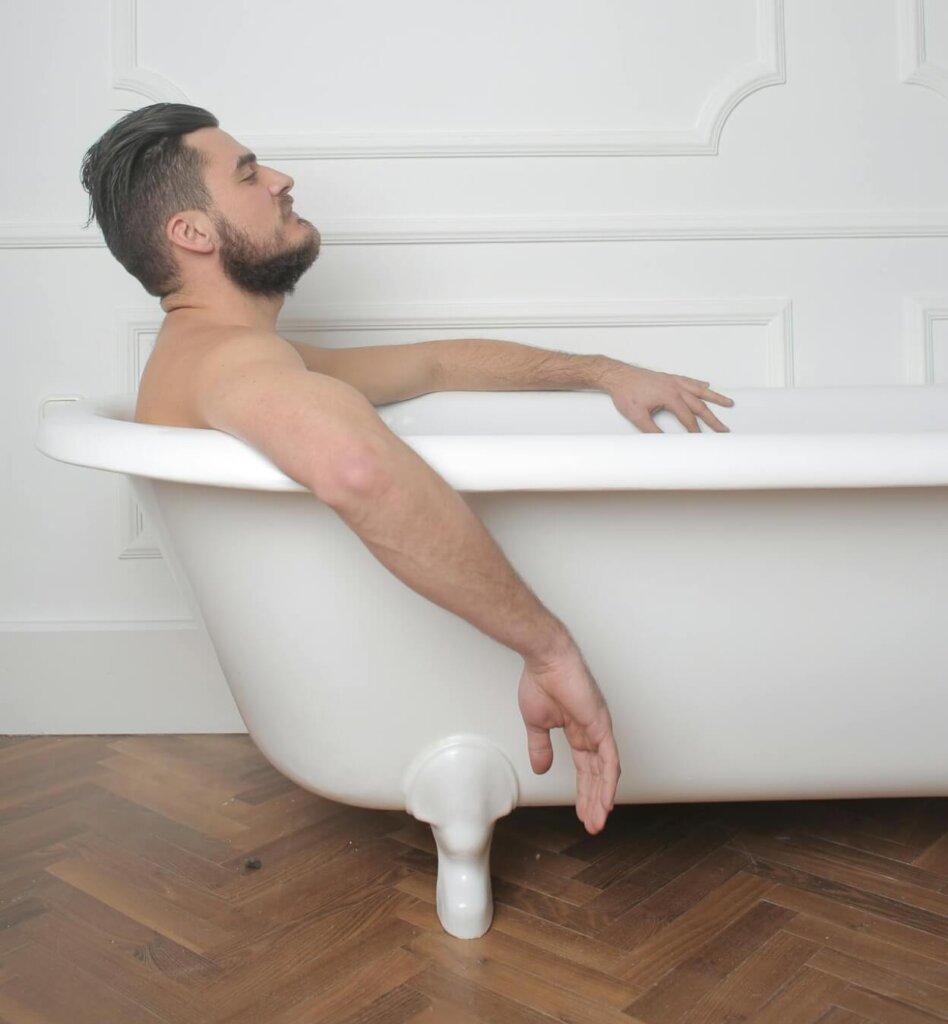
Give yourself time. A bath pillow makes it easier to stay comfortable, but it isn’t essential. Simply lean back and let the heat do its work.
You could be like my father with his pipe and scotch, but don’t take anything into the tub that shouldn’t get wet. Struggling to keep a cigar or book dry becomes an irritating task that defeats the point of bathing.
Turn your phone off (unless it’s your source of music) and keep electronic devices away from the water.
And don’t fall asleep; while the chance of a healthy adult drowning in the tub is said to be low, it’s still not the place for a nap.
Most guides tell us to stay in for no more than 20–30 minutes, but there’s no harm in soaking longer.
Pruning is also harmless; it’s just nature’s way of giving our fingers and toes more grip in wet conditions.
The Cleaning or Treatment Bath
If you’re taking a cleaning bath, soap yourself down early while the water is still hot. If you relax before washing, it becomes a labor.
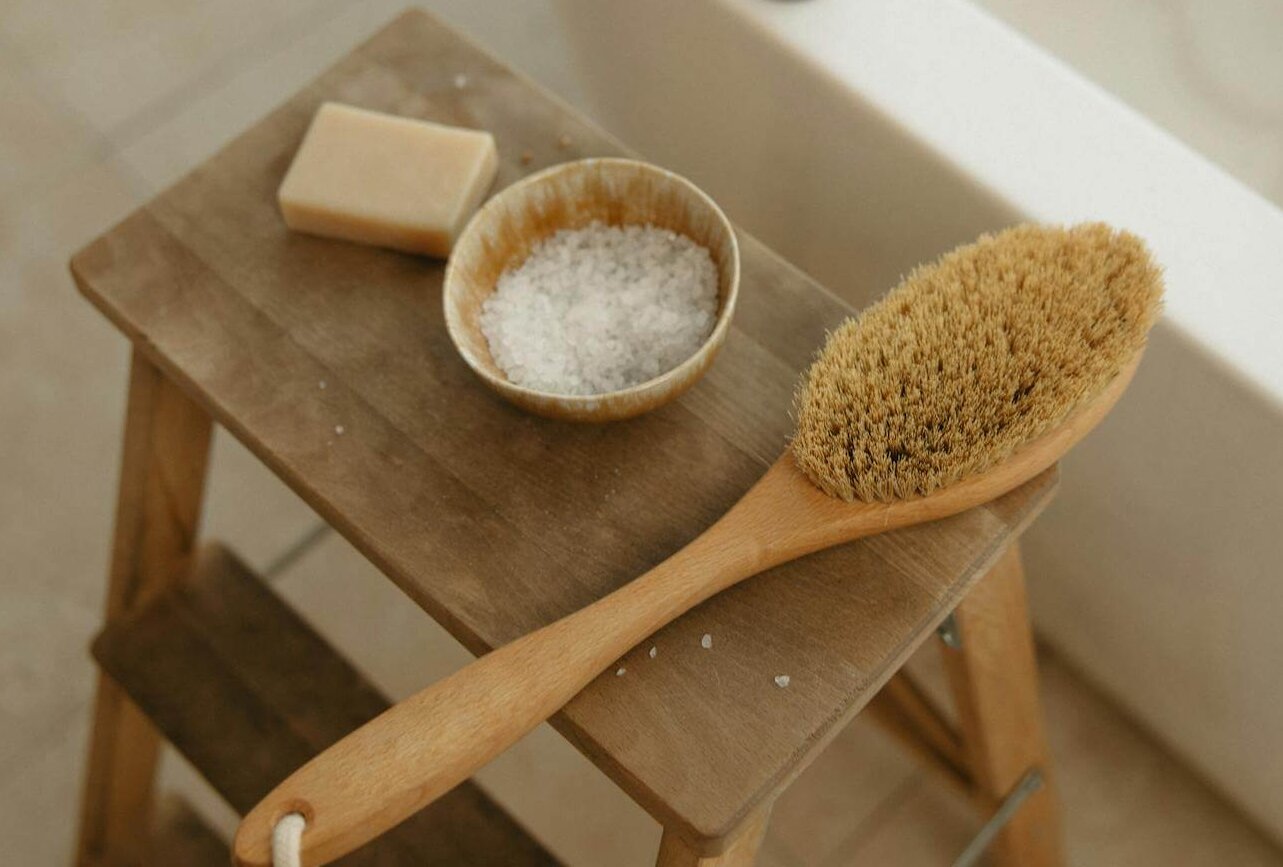
Work on the same principle if it’s a treatment bath. This is where you might exfoliate with a bath brush, loofah, or body scrub, which can double as a bath additive.
➜ Salt scrubs work best as additives. The salt dissolves while its carrier disperses.
➜ Oat‑based scrubs aren’t quite as practical. They soften the water and calm the skin, but whole oats behave as an infusion, leaving debris in the tub.
Anything with plastic beads or ground nutshells is for scrubbing only, not soaking.
➜ Bathtime is also excellent for face and hair masks. The heat softens the skin and improves absorption while you soak.
6. Rinse After Bathing—if Necessary
You may want to shower afterward if you’ve used herbs or botanicals that cling, or a salt- or soap-based additive on dry, sensitive skin. If so, use plain water; there’s no need for body wash.
But most additives are designed to remain on the body. Oils, milks, oats—they’re all meant to leave a light film that protects the skin barrier.
Bathe in a way that feels good, and it will do you good.
And when you’re done, the only thing left is the part nobody enjoys: cleaning the tub. Fortunately, that doesn’t have to be a chore. A simple mix of vinegar and dish soap cuts through residue in seconds, and you probably already have those in your kitchen, too.
© 2026 J. Richardson


