Looking for a body scrub for men? Whether you want cleaner, smoother skin or less odor and fewer ingrowns, the answer is here.

What Is a Body Scrub?
It may seem like a silly question, but not all physical or mechanical exfoliants call themselves body scrubs.
Body washes with jojoba beads for daily use carry the label “exfoliating body wash”. Grittier body washes also avoid the term. Bar soaps with exfoliating particles call themselves “buffing bars,” “polish bars,” or “smoothing bars.”
Brands seem to use the word “scrub” only when the exfoliating particles are suspended in a non‑cleansing carrier like oil, gel, cream, or honey.
But the mechanical action is always the same, so we’ll treat them all as “scrubs.”
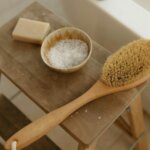
What we won’t include are wash cloths, sponges, loofahs, bath brushes, and exfoliating mitts and gloves. These are exfoliating tools. They’re convenient for the tub because there’s no need to stand up to apply them, and they don’t leave debris in the bathwater.
Exfoliating mitts and gloves are ideal for the shower, but with ingredients to improve skin condition, a body scrub is sometimes better.
Why Do Men Need a Body Scrub
Dead cells make the skin appear dull, dry, or rough. They’re most noticeable on the knees and elbows, but are present on all body parts to varying degrees. A brownish buildup of dead cells, sebum, and grime in the pits of the ankles and throat is also common. Keratosis pilaris, sometimes referred to as “chicken skin,” is a buildup of keratin on the upper arms, which causes the skin to feel lumpy. Using a scrub once or twice a week can prevent all of these.
Exfoliation makes the skin appear more vibrant, improves the absorption of creams and lotions, and reduces odor.
Because dead cells can trap odor compounds, body scrubs can also help against strong underarm odor and 2-nonenal, the so-called “old people smell” that often develops in men over 40.
If you already have keratosis pilaris, use a chemical peel with glycolic acid or salicylic acid. Body scrubs can only prevent the condition. Or look for a chemical/mechanical hybrid.
When to Use a Body Scrub
Product and Skin Type
How often you apply a body scrub depends on the product and your skin type.
So-called exfoliating body washes with jojoba beads or ultra-fine particles are suitable for daily use. These include powdered bamboo, plant-based cellulose beads, and finely ground sugar.
Grittier particles—including sea salt, pumice, and ground kernels—are for less frequent use: for normal and oily skin, two to three times a week; for dry and sensitive skin, once a week.
Regardless of skin type, gritty scrubs used too often cause redness, micro-tears, and barrier disruption.
When Are Body Scrubs Most Useful for Men?
For more effective exfoliation, time it around occasions that benefit most.
- After strenuous activity that’s brought on a sweat, whether it’s sport or digging in the yard. It can unclog pores and dispel deep-seated body odor.
- Before self-tanning for an even finish, concentrating on the knees and elbows, as well as hollows and skin folds. But avoid oil-based products. These create a barrier, leading to streaks and patchiness.
- About 24 hours before shaving or waxing body hair. Without dead cells to clog the razor and pores, you’ll get a better shave with less risk of ingrown hairs. It also removes trapped oils, giving wax a firmer grip. As with self-tanner, oil-based products should be avoided.
These are cases that rely on good results. Steer clear of bar scrubs, which many users—myself included—find no more effective than regular bar soap. You need a gritty product that responds to pressure.
Product Ingredients: Which Do You Need?
If you’re sick of staring at drugstore shelves with a big question mark in your head, here are the ingredients to look for according to your skin type and its needs.
There is no one-size-fits-all, although some men’s brands pretend otherwise.
| Ingredient | Skin Type | Use‑Cases | Notes |
| Sea Salt (gritty) | Normal-oily | Rough patches, pre-tan prep | Drying: avoid on sensitive skin |
| Pumice (very gritty) | Normal–oily | Thick skin, feet | Harsh; for occasional use |
| Ground kernels (coarse) | Normal | Stubborn buildup | Can cause micro‑tears |
| Coffee grounds (medium) | Normal–oily | Grime, ingrowns | Messy; clings to hair |
| Sugar (medium-fine) | All | Weekly maintenance | Dissolves; gentler than salt |
| Baking soda (fine) | Normal–oily | Odor control, 2‑nonenal | Short sit time; rinse thoroughly |
| Bamboo powder (fine) | Normal–dry | Dullness, mild roughness | Good for men who dislike grit |
| Jojoba beads (fine) | All, including sensitive | Daily maintenance | No friction; use like body wash |
| Cellulose beads (ultra-fine) | All | Daily polishing | Very gentle |
| Plant oils (softening agent) | Dry–normal | Flaky patches, rough spots | Avoid before tanning/waxing |
| Honey (softening agent, humectant) | Dry-normal | Reduces pressure, softens buildup | 1‑minute sit time improves effect |
| Glycerin (humectant) | All | Reduces irritation, improves glide | Good for sensitive skin |
DIY Body Scrub
Combinations of the above ingredients are widely available in stores, but some are already sitting in your kitchen cupboard.
It’s not a project. You just mix two ingredients in a plastic container and take it with you to the shower. It could be this morning’s coffee grounds with noncomedogenic sunflower oil, or baking soda and your regular body wash—they work as well as anything you can buy.
If you’re mixing a scrub with a non-cleansing base, add half a teaspoon of lemon juice.
How to Use a Body Scrub
1. Prepare the Skin
If you’re using a scrub with a non-cleansing base, shower with your regular body wash first. Otherwise, wet your skin to provide slip; applying a scrub to dry skin scratches and causes micro-abrasions.
2. Apply the Product
Apply a small amount of the scrub to your palms and spread it over your body. You need just enough to feel consistent friction. If the product slides around, you’ve used too much; if it drags, you’ve used too little.
Having said that, don’t expect much in the way of friction with exfoliating body washes using jojoba beads or other ultra‑fine particles.
3. Let it Sit (Optional)
Let honey- and oil-based scrubs sit for a minute to soften dead cells and loosen sebum plugs.
Do the same with baking soda to neutralize odors more effectively.
4. Massage into the Skin
With light to moderate pressure, massage in circular motions. Be especially gentle around the armpits and the hollow of the neck. Avoid the rest of the throat altogether—it needs a facial exfoliant. Stay away from irritated or freshly shaved skin, too.
5. Rinse
Rinse thoroughly to remove all particles and carrier residue. Anything left behind can cause irritation, interfere with your deodorant or moisturizer, and even trap odor.
6. Moisturize
Unless waxing or self-tanning, always moisturize after exfoliating. Scrubbing removes dead cells and surface oils, leaving the skin temporarily exposed. A moisturizer restores the barrier and prevents dryness.
Finding the right body scrub for a man means knowing his exact needs and the ingredients that match them. Whether you find it at a drugstore or mix it yourself, it won’t be the one-size-fits-all most men end up using.
© 2026 J. Richardson