
Learn how to properly shave your face with clear steps on prep, lubrication, razor choice, technique, and post‑shave care.

Most of us learn to shave by watching the men in our households; for me it was my father and older brother. At 13 I felt ready to try it myself, and it worked well enough.
Since then, the market has evolved and my skin has changed, which has led me to try a wide range of shaving products. It also helps that my barber has always been there to offer his expert guidance.
This post consolidates that experience so you can enjoy a perfect shave and avoid trial and error, whether you’re a practiced shaver encountering irritation for the first time, a young man eager to get his first shave right, or a veteran checking that he’s still up to date before advising a novice.
If you’re a parent, it may seem safer and easier to gift your teenage son an electric razor, but he’ll probably want his first shave to be wet. Seeing himself with a beard of lather is part of the rite of passage.
How to Shave Step-by-Step
1. Wet Your Beard
You don’t need to wash your face before shaving. In fact, keeping the skin’s natural barrier intact helps prevent irritation. But you do need water to soften the whiskers and provide an absorbent surface for the shaving lubricant.
Wet your beard with your hands rather than a washcloth or shaving brush. Being from a time when hot water was sparse, my father always filled the sink first—the soapy water actually gives more glide. My brother and I use running water throughout.
If you’re wondering about temperature, most guides agree on warm water. But cold offers some advantages, as I discuss in this post.
2. Apply Lubricant
Choose one of the following to lubricate your wet beard:
Shaving Oil
For men with dry, sensitive, or acne-prone skin, shaving oil can act as a barrier between the skin and a soap-based lubricant. Used like this, it’s referred to as “pre-shave oil.”
If you’re using a multi-blade cartridge, oil can serve as a stand-alone lubricant. Its transparency allows you to see what you’re doing, which is perfect for shaving the body and head too.
Avoid using oil alone with a safety razor—you’ll be more prone to cuts and nicks.
There’s no need for a product labeled “shaving oil” or “pre-shave oil.” The sunflower oil on your kitchen shelf provides the ideal consistency and is non-comedogenic. Just massage it into your beard.
Brushless Lubricants
Back in the 1930s when brushless lubricants first entered the market, they were thick and pasty in order to give safety razors enough grip to prevent cuts. The gels and foams of today are much lighter and do little more than keep the whiskers moist, making them better suited to multi-blade cartridges.
But they remain as convenient as ever: simply dispense from the can and spread over your beard with your fingers.
Creams, Soaps, and Brushes
When I first started shaving, using a brush to lather up was non-negotiable, even if it was my father’s. I’ve dedicated an entire post to the shaving brush, but here’s a shortened explanation.
A brush picks up soap or cream and whips it into a lather. This creates a dense layer between the skin and the blade, which is especially helpful when using a straight or safety razor.
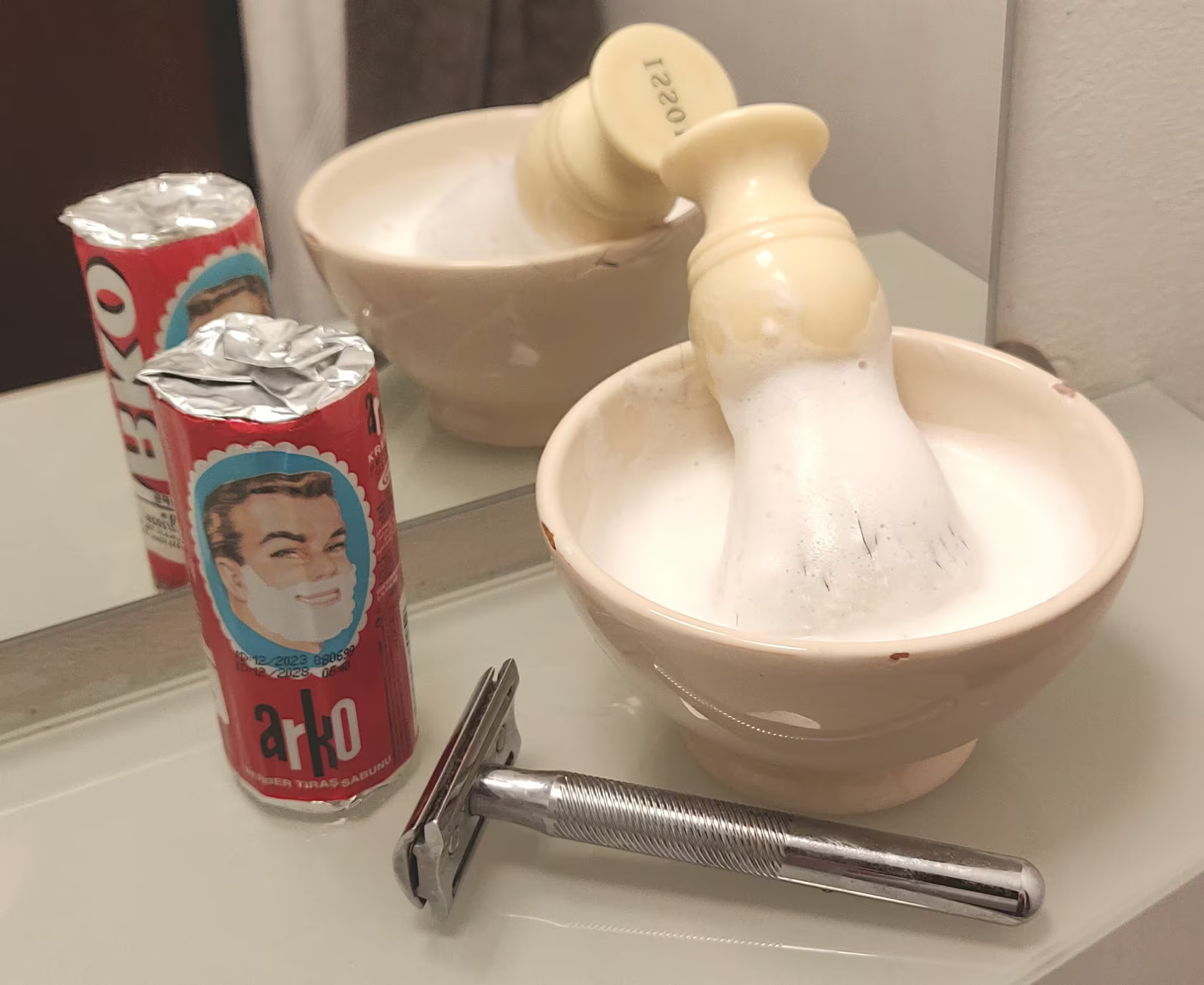
Shaving soaps that come in mug sets are puck-shaped. To use, swirl your wet brush over its surface to load it, then work it into your beard in circular motions. I always start at the throat. If applying to the mustache area, press your lips together to keep your mouth free.
If using a shaving stick, swipe it directly over your wet beard, then whip it up with the brush. Shaving cream, which is available in tubes or tubs, is applied in the same way.
In the photo below, I’ve built a lather in my shaving bowl before applying it to my face—this is another option with either a puck, stick, or cream.
3. Shave Your Face
Should You Use a Cartridge or Safety Razor?
If you’re using shaving oil as a stand‑alone product or you don’t have a shaving brush, use a multi‑blade cartridge razor. The first blade lifts the whiskers, allowing the others to cut just below the skin’s surface. This gives a closer shave in fewer passes and requires less stretching—more on that in a moment.
A safety razor cuts whiskers at surface level for a gentler shave. Use it in conjunction with a shaving brush.
The Blade
Before you begin to shave, make sure the blade is new; as a rule of thumb, replace it after every three or four uses. A dull blade tugs, which can be painful.
For most men, blade angle is intuitive, but at 30–45° you’ll feel it engage the hair without scraping the skin.
Keep your blade wet throughout the shave. Dry blades result in razor burn.
Shaving Order
Always shave according to the order of beard coarseness. Start at the neck where whiskers are softest, then move to the cheeks and sideburns, then the upper lip, and finally the chin. This gives the hairs you shave last more time to soften.
Passes and Direction
Depending on how tough your beard is, you may want to shave in more than one pass. The first should be in the direction of growth (with the grain) to prevent irritation and ingrown hairs. The second can be across the grain, especially at the cheeks and chin. If a third is necessary, go against the grain.
Pressure
Any pressure required for shaving is provided by the weight of the razor’s handle. Adding more causes irritation.
Contort Instead of Stretching
Stretching the face with your fingers for a closer shave results in even a safety razor cutting below the surface, which may lead to ingrown hairs. Muscle-driven contortion works better than stretching.
The Adam’s Apple
If you have a prominent Adam’s apple, swallow hard to shift it aside.
4. Rinse Your Face
Rinse your face with cold water while feeling for missed whiskers. These you can remove with a wet razor; there’s no need to add more lubricant.
5. Cleanse
To remove shaving debris thoroughly, either take a shower or use a cleansing product such as micellar water. Applied with a cotton pad, this gently absorbs dirt, sweat, cosmetics, and other residue.
Follow up with an alcohol-free balm, moisturizer, or your usual skin treatment.
I was lucky to grow up in a household where shaving gear was as plentiful as the men who didn’t mind me watching and learning while they used it. If that isn’t the case for you, I hope this post helps.
© 2026 J. Richardson


