
A straightforward guide to building a men’s skincare routine that’s fast, effective, and easy to stick to.
Building a Viable Skincare Routine
Building a men’s skincare routine isn’t just about facial skin. We have whiskers and many of us are bald—either by shaving or through male pattern baldness (MPB). The dome then becomes an extension of the face.
But a routine involving more than a few steps isn’t viable for most men. We want to be in and out of the bathroom without ado. It should be fast, easy, and effective.
That means every step and every product has to earn its place.
And that’s where the problem begins. With drugstore shelves stacked with multiple competing products, finding the one that best fulfills your needs is like looking for a needle in a haystack.
And how are you supposed to fit serums, exfoliants, and masks into your routine without turning it into a full‑time job? Do you even need them? I go into that more deeply in my post How to Look Good Every Day, but here we’ll cut through the marketing noise and set out the essentials.
Know Your Skin Type
Start by identifying your skin type. This is key to building a skincare routine that works.
All you need is a tissue and good lighting. Here’s a quick run-through.
How to Carry Out a Skin Type Test
- Start with a clean face: Wash with water and a mild cleanser, pat dry, and wait 30 minutes—don’t apply any skincare products.
- Blot with a Tissue: Gently press a tissue on your forehead, nose, cheeks, and chin.
- Hold it up to the light: The oil pattern (or lack thereof) reveals your skin type.
What the Results Mean
- Normal (Eudermic): Minimal oil on the tissue. Your skin feels balanced and smooth, and rarely breaks out.
- Dry (Xerosis): Little to no oil. Your skin may feel tight, flaky, or rough.
- Oily (Seborrheic): The tissue shows significant oil, especially on the T-zone (forehead, nose, and chin). Your skin may look shiny and be prone to breakouts. This is typical of young men.
- Combination: Oily on the T-zone, but dry or normal on the cheeks. This is the most common skin type in men. Because our skin is thicker and produces more sebum, we rarely grow out of oiliness completely.
- Sensitive: Not always revealed by oil levels—look for redness, irritation, or stinging after shaving and applying skincare products.

Building a Twice-Daily Skincare Routine for Men
Once you’ve established your skin type, you’ll be able to choose products that improve and maintain skin condition.
A cleanser and moisturizer would, theoretically, be all you need. After all, cleansing and hydrating are the core of an effective routine.
But most of us want to shave at least some part of our facial hair for a well-groomed appearance. Even if you wear a full beard, you probably tidy the tops of the cheeks and neckline.
We also need to avoid over-washing or using the wrong cleanser. Both can make the face sore and dry out beards and mustaches.
And then there’s the question of which moisturizer to use.
Let’s break it down. It’s actually as simple as 1-2-3.
1. Shaving
Because I like a thorough cleanse after shaving, this is where I start. But as you’ll see as we work through the routine, it isn’t a hard and fast rule.
Wet or Dry?
Even if it seems like the easier option, dry shaving isn’t the answer.
The constant tugging and stretching undermines elasticity, which eventually causes sagging, especially around the jaw and neck.
Applying a little barber powder to the beard area can ease this, but wet shaving is far more therapeutic.
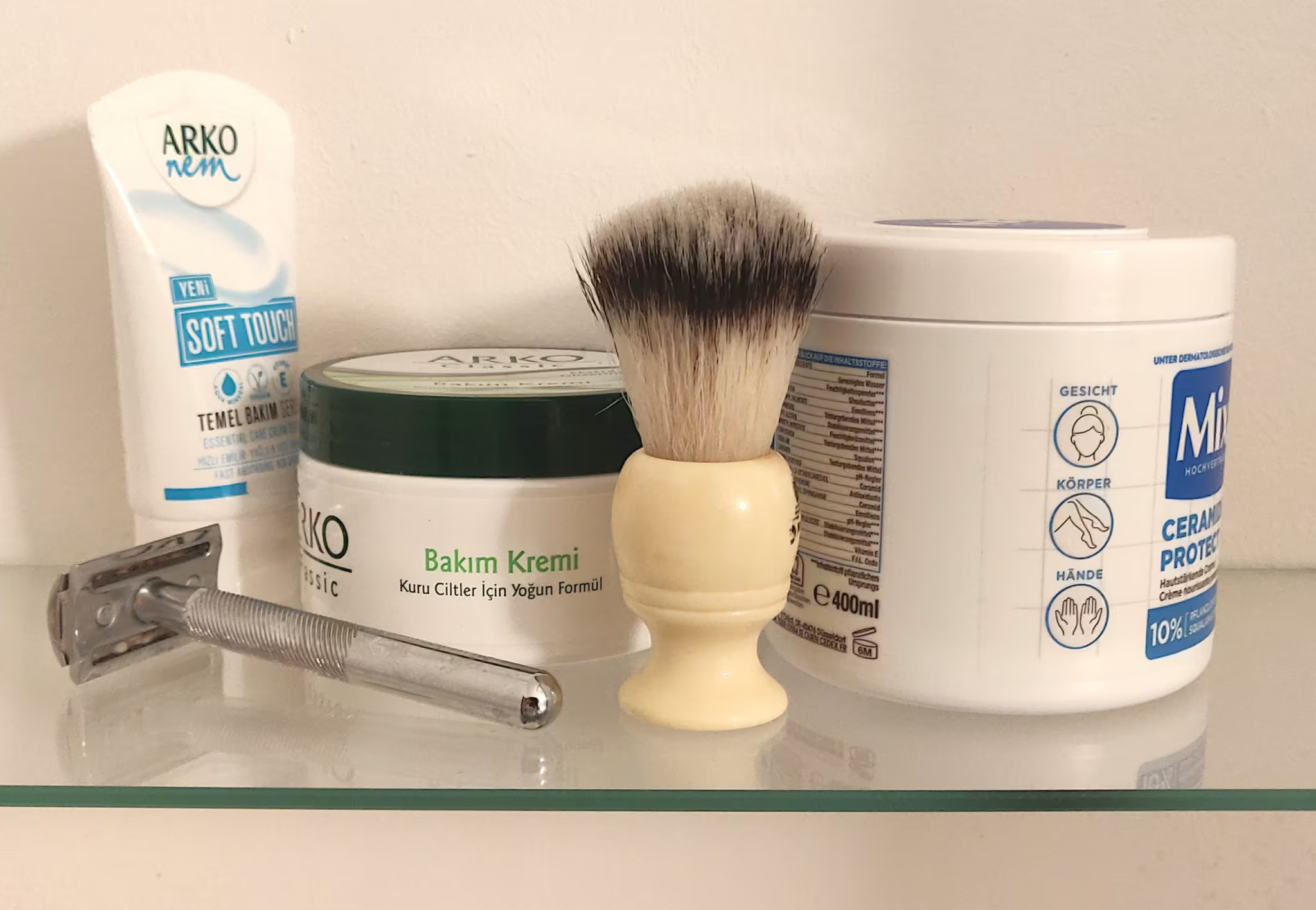
Personally, I do it the old-fashioned way with a brush and safety razor.
Not only does a brush create a rich lather, it cleanses, exfoliates, and lifts the whiskers. And, unlike cartridges, the blades of a safety razor don’t cut below the skin surface, meaning fewer ingrown hairs and a gentler shave, which is useful for sensitive and acne-prone skin.
To prevent breakouts, create a barrier between your skin and the lubricant with jojoba or sunflower oil. These are non-comedogenic, meaning they won’t clog pores. There’s no need to buy a commercial shaving oil.
For dry, sensitive, or acne-prone skin, use a shaving cream rather than a soap puck or stick. It’s less likely to irritate and has more moisturizing ingredients.
For normal skin, use whichever lubricant takes your fancy. But if you shave with a safety razor, avoid brushless lubricants like foams and gels. A brush helps prevent cuts and nicks.
2. Cleansing
In the Shower
It doesn’t matter whether you shower in the morning or at night. More important is your cleanser. It should match your skin type and provide the deepest cleanse of the day.
Regular body wash is formulated for the tougher skin from the neck down. You may think it’s doing no harm to your face, but switch to something more appropriate and you’ll notice a positive difference in skin and facial hair texture.
For dry, sensitive, and normal skin, use a wash lotion with a neutral pH of 5.5. This leaves the skin barrier intact while removing shaving debris and impurities.
You’re probably familiar with Sebamed’s face and body wash, but I find my drugstore’s home brand more than adequate.
And, because it doesn’t strip away oils, it doubles as a beard shampoo.
But don’t forget that for strong, healthy growth, facial hair should be shampooed only once or twice a week. For the rest of the time, run over it with a boar-bristle brush to remove loose cells and whiskers, then rinse with plain water in the shower.
For oily and acne-prone skin, try a face wash with salicylic acid and zinc. If daily use proves too harsh, alternate with a pH-neutral wash lotion.
Don’t use acne remedies on facial hair, since they dry it out.
Micellar Water
Chances are, most men have never heard of micellar water. But if you’re building a skincare routine that’s supposed to stick, this is the kind of simplified product you need. It works as both a cleanser and toner.
Composed of tiny cleansing molecules (micelles) suspended in water, it’s gentle, non-stripping, and no-rinse. It lifts away sweat, pollution, sunscreen, and product residue (e.g., from shaving) in about 30 seconds without disrupting the skin barrier.
Use it for a quick cleanse before bed, in the morning if you shower at night, or after shaving if you prefer to shower first.
It’s also great on the go. Look for travel-size bottles for gym bags and carry-ons, or if you want to test it out before committing to a full bottle.
Most manufacturers have a “one-for-all” version, but there are multiple variants formulated for oily, acne-prone, sensitive, and dry skin.
How to Use Micellar Water
This is so simple that it barely deserves its own heading.
Apply to a cotton pad and swipe it over your face. Repeat for a deeper cleanse.
Cotton balls are often recommended, but these leave stubble and whiskers covered in lint. Pads are more suitable for men.

3. Moisturizing
There are three types of moisturizer: day cream, night cream, and 24-hour cream.
Day Cream
Day creams are lighter in texture than night creams and most include an SPF of at least 15. That’s usually enough for a Northwestern European climate. For more intense sun exposure, you’ll need an additional sunscreen.
Night Cream
Night creams skip the SPF (as they should) and instead focus on hydration and repair. Sleep is about restoration: blood flow and cell turnover increase, and damage begins to heal. The richer texture of night creams supports this process.
24-Hour Cream
24-hour creams are for morning and night. They streamline your grooming supplies, simplifying your routine and saving space.
These shouldn’t contain sunscreen, but they may use ethylhexyl salicylate, a substance that remains inert unless exposed to UV light. Unlike regular sunscreens, it won’t irritate or impair the skin’s ability to heal at night, nor interfere with treatments.
For products lacking sun protection, you’ll need to apply sunscreen on top. For easier removal at night, choose a mineral product (zinc oxide or titanium dioxide) rather than a chemical one.
Which Moisturizer for Which Skin Type?
Oily or acne-prone skin
Hydration and oil are not the same thing. You need moisture that doesn’t add to the problem.
Choose water-based products, which are light, fast-absorbing, and non-comedogenic. Ideal are gels with ingredients like hyaluronic acid or niacinamide.
For daytime, pair with a mineral sunscreen. Its ingredients sit on top of the skin without clogging pores and provide a matte finish. They’re also less likely to irritate freshly shaved skin. A product containing iron oxides, which adds a discreet tint, can play down blemishes and inflammation.
Dry or mature skin
Dry or mature skin needs a rich-textured cream, especially at night. Ingredients like shea butter, ceramides, or squalane support the skin barrier and ease the tight, stretched feeling that comes with dryness.
Ceramides are particularly known for their ability to repair the barrier. Use after shaving with a multi-blade cartridge, which removes the top layer of skin.
Normal skin
Use a product labeled “normal.” It should be lighter for the daytime and richer at night.
Combination skin
As previously mentioned, a mixture of an oily T-zone with drier cheeks is the most common skin type in men. There are products labeled specifically for combination skin, but you may get better results by treating each area separately: lightweight where you shine, richer where you’re dry or flaky. Experiment to find what works best for you.
Sensitive skin
The simpler the product, the better. It should be fragrance-free and tested for reactive skin. Less is more when your skin’s easily irritated.
For Acne-Prone Men
You’ve never seen a breakout under your eyes—and there’s a reason for that. The skin there is thinner and has almost no oil glands. As such, it tends to dryness and lines, even if you’re still in your teens.
Build a richer moisturizer into your skincare routine for the eye area only. It can help prevent premature wrinkling and loss of elasticity.
How to Apply Moisturizer
Again, this is so simple, it probably doesn’t deserve its own heading.
But consider gravity while applying, which means massaging in upward and outward motions. This helps delay sagging, keeping the skin firmer for longer.
If your face appears too shiny after moisturizing, blot with a tissue.
What About Moisturizing Your Dome and Facial Hair?
Don’t just moisturize your face; think about your facial hair and bald head.
Facial Hair
Facial hair is no reason to neglect the skin beneath it.
Using your fingertips, press the same moisturizer you apply to the rest of your face into your beard or mustache.
And swap fragranced beard oils for pure jojoba oil—especially if you have acne-prone or sensitive skin. It absorbs cleanly, hydrating both whiskers and skin, and it won’t clog pores or trigger irritation.
For men with normal and dry skin, use coconut oil at night and a beard balm or wax during the day—this is basically a leave-in conditioner.
Bald or Shaved Heads
Treat your dome as an extension of your face.
If your head is shaved, you probably produce a lot of scalp sebum. But you should still apply a light moisturizer: its SPF helps to prevent sunspots. If you like a matte finish, a mineral sunscreen is even more effective.
An MPB dome is usually drier. I use the same moisturizer as for my face plus a little jojoba oil—I like my head to shine.
A facial scrub used on the head can also add shine as well as prevent ingrown hairs if you’re shaved.

Extras by Skin Type: What to Try and How to Build It Into Your Skincare Routine
Once you’ve built a basic skincare routine, slot extra steps between cleansing and moisturizing to address specific issues.
Exfoliants
Exfoliating removes dead skin cells for a brighter, smoother complexion. It also prevents clogged pores and breakouts, and allows serums and moisturizers to penetrate more deeply.
Apply chemical and enzyme exfoliants to dry skin after cleansing. Scrubs (also called mechanical or physical exfoliants) should be applied to wet skin. But be very gentle; they can cause broken capillaries.
Use 1-3 times a week.
Masks
Masks deliver concentrated ingredients to target specific skin concerns, whether acne, oiliness, dryness, or irritation.
Apply after cleansing and/or exfoliating 1-3 times a week.
Serums
Serums do a similar job, but on a daily basis. That may sound inconvenient, but it takes less than half a minute.
Apply once or twice a day before moisturizing.
How They Fit into Your Routine
If you were to build all of these into your skincare routine, the order would look like this: cleanser → exfoliant → mask → toner (if using) → serum → moisturizer.
Products to Try
Try the following products according to your skin type. All are safe to use with facial hair.
For the scalp, which can be sensitive, avoid chemical exfoliants. Scrubs are better.
Oily or Acne-Prone Skin
- Exfoliant: A salicylic acid cleanser (a beta-hydroxy acid, or BHA) works pore-deep to reduce oil buildup and prevent breakouts.
- Mask: A clay mask, like kaolin or bentonite, draws out excess oil and keeps the skin feeling balanced. See my post on clay masks.
- Serum: Niacinamide is an all-rounder—it helps regulate oil production and calms inflammation without drying the skin out, including post-shave redness.
Dry or Mature Skin
- Exfoliant: Lactic acid (an alpha-hydroxy acid, or AHA) gently smooths the skin’s surface while preserving moisture.
- Mask: A rich cream mask with squalane or ceramides offers nourishing support for the skin barrier.
- Serum: Hyaluronic acid delivers deep hydration and helps plump fine lines.
Normal Skin
- Exfoliant: Fruit enzyme exfoliants—like papaya or pumpkin—gently refresh without irritating.
- Mask: A hydrating clay mask with added ingredients like aloe or glycerin keeps the skin balanced.
- Serum: Vitamin C brightens skin tone and helps prevent age spots with consistent use.
Combination Skin
- Exfoliant: Glycolic acid (AHA) evens texture, especially on oilier areas.
- Mask: Multi-masking may do the trick—apply clay where you’re oily and a hydrating mask on drier patches.
- Serum: Niacinamide with zinc helps reduce oil in the T-zone and soothes dryness elsewhere.
Sensitive Skin
- Exfoliant: A pumpkin enzyme mask or polyhydroxy acid (PHA) toner offers ultra-gentle exfoliation without causing irritation.
- Mask: A fragrance-free gel mask with aloe or oat extract helps soothe and replenish.
- Serum: Look for calming ingredients like Centella asiatica or azelaic acid to reduce redness and support healing.
Eye Creams
And a final extra: eye creams. I’m not a great fan of these; basically, they don’t seem to do any more than the moisturizer I apply to the rest of my face. Nevertheless, they could be useful if you’re prone to puffiness or dark circles. Try ingredients like caffeine (for puffiness) or peptides (for firmness).
For extreme dryness, you’d be better off with a hydrating serum (hyaluronic acid, glycerin, or panthenol) sealed in with your usual moisturizer. Another option is slugging, to which I’ve dedicated an entire post.
Where From Here?
You don’t have to renew all your personal care items at once. Take it one step at a time, gradually replacing what you already have.
Soon, you’ll start to notice improvements—and maybe even begin fine-tuning with a serum or exfoliant once or twice a week.
I think what keeps me going on this journey is the confidence a relaxed and healthy face gives me. I wouldn’t want to be without it.
© 2025 J. Richardson


