
Learn how to store and care for ties so they last for years, with tips on fabric, stain prevention, cleaning, and travel.
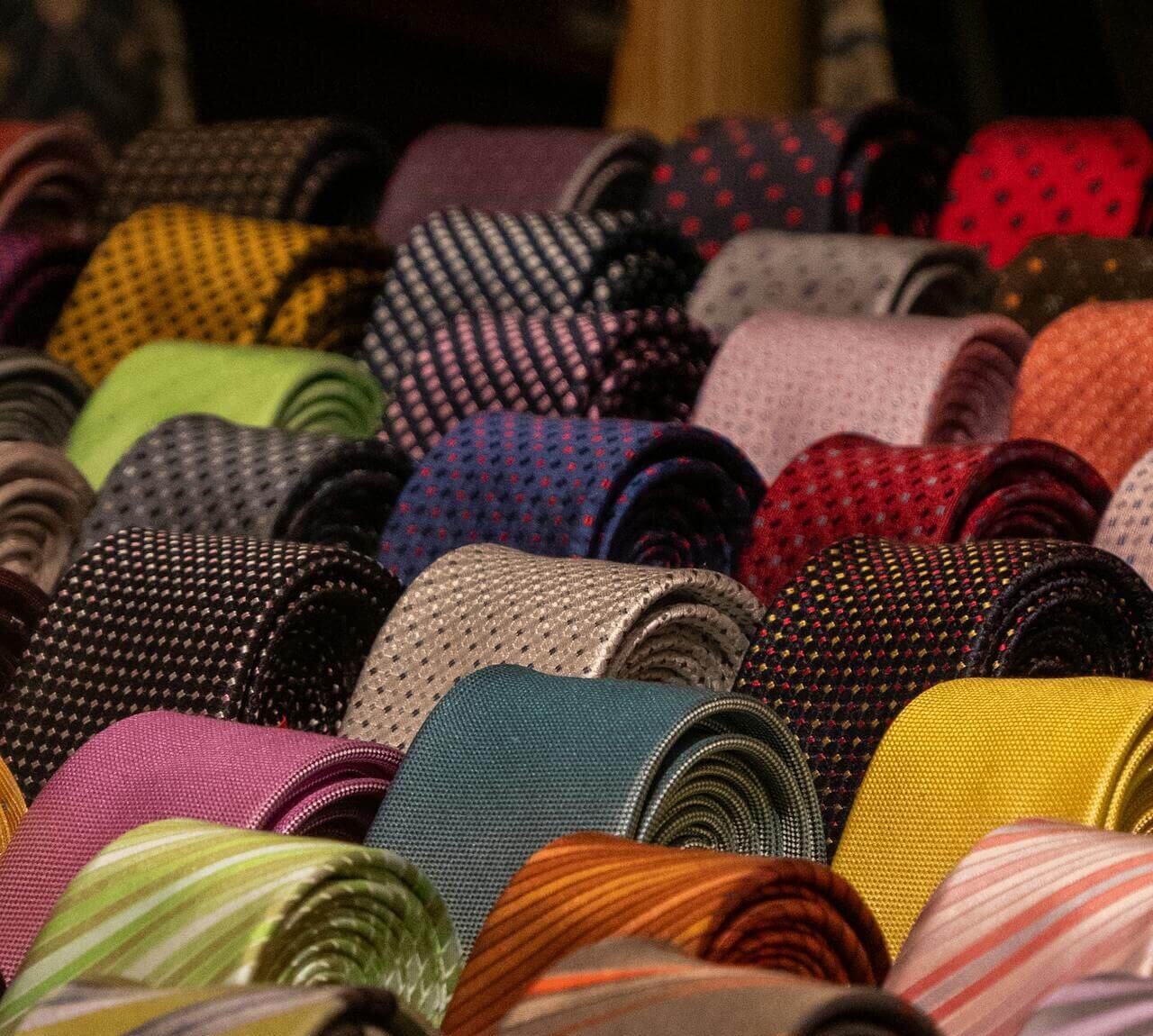 Source: Pexels
Educated in the UK, I started wearing ties at the age of five as part of a school uniform. They were made from 100% tightly woven polyester with a stiff, synthetic interlining. They withstood all manner of abuse, didn’t stain, were dyed with extremely stable colors to avoid fading, and were machine washable.
My first office job after leaving school also demanded a tie—there was no such thing as business casual back then. My budget only allowed for polyester, but the fabric was finer and the interlining more delicate. Yanking it loose and stuffing it in a pocket at the end of the day was out of the question. Doing so would have pulled it out of shape, making a decent knot and drape unachievable.
Natural fibers like silk, wool, cotton, and linen are even more sensitive.
They’re everything my old school ties weren’t. That’s why it’s imperative to protect them from soiling, creasing, fading, and wilting.
How to Store Ties
Since the widespread adoption of business casual, correct long-term tie storage is more relevant than ever.
I still need mine for weekly worship, but for most men, big events like weddings and job interviews are the only reason to wear one.
Because ties can go unused for years, not only do they need protection from environmental factors to remain functional, but from time itself.
Choose a width of 3–3.25 inches, which won’t look dated the next time you need it. And store according to fabric type—this is the foundation of good tie care.
Store Your Tie on a Rack
If you’d always thought of a rack merely as somewhere to keep ties out of the way, think again. It actually provides a dedicated space where they can hang freely, without the weight of other clothes crushing them. Built into a closet, a rack also keeps ties away from light, which prevents fading.
Having said that, hanging isn’t good for all ties. Let’s take a look.
Polyester
Polyester ties are more robust and forgiving than other fabrics. You can hang or roll them, although hanging is best.
If you’ve kept them rolled in a drawer for years, hang them for a few hours before wearing to remove the inevitable curl.
Silk
Silk ties drape best when stored on a rack, since gravity keeps the fabric relaxed.
But for short-term storage, silk doesn’t crease when rolled. As with polyester ties, hanging shortly before wearing restores drape.
Wool, Cotton, Linen
These are the most difficult tie fabrics to store and care for.
All must be hung carefully and never rolled.
Cotton and linen crease sharply and permanently. Therefore, don’t place other ties on top of them.
Wool relaxes naturally, but creases are still stubborn.
Knitted Ties
Whether silk, wool, cashmere, cotton, or synthetic, never hang knitted ties, since it stretches the fabric. It can also cause a straight tip to develop waves.
The best way to care for knitted ties is by rolling them and storing in a roomy drawer.
Packing Ties for Travel
As most of us know, one of the most convenient, space-saving ways to pack clothes is by rolling. Polyester, silk, and knitted ties are ideal for this.
To be sure that polyester and silk ties look their best, hang them once you reach your destination. If there’s no tie rack, use a clothes hanger instead.
Wool, cotton, and linen ties are less suitable for travel. If you must take one, hang it with your suit or sport coat in a garment bag.
Folding ties and slipping them into a pocket when traveling is only safe for polyester. Natural fibers and knitted ties crease or distort when folded.

Daily Tie Care
Untying a Tie
It’s tempting at the end of a long day, but never pull a tie loose at the knot. Over time, it ruins the interlining, making a decent knot impossible.
Instead, reverse the knot step by step, exactly as you tied it. This is made easier if the tie isn’t fastened too tightly to begin with—it also spares the interlining from compression and fatigue.
It goes without saying that you should never store a knotted tie.
Let the Tie Rest
Just like your suit, a tie needs time to recover.
After wearing, the interlining will be slightly compressed and the fabric will have taken on the shape of the knot. Hanging it for 24–48 hours allows gravity to relax the fibers and the lining to regain its structure.
This is why you should rotate your ties. Giving each one a day or two off keeps drape and knotting performance at their best for years.
Protect Your Tie from Stains
Most tie damage comes from food, drink, and the natural oils on your hands.
Silk in particular absorbs oil instantly and permanently. When adjusting your tie, handle the knot and the tail rather than the blade (the wide front end).
When dining out, order food that won’t splash or drip. That means no long pasta, juicy meats, or ribs. Some men cover their lapel area with a napkin, but I find it looks childish and would never do it.
If you’re not wearing a vest, the better solution is a tie bar. It keeps the blade anchored to your shirt placket so it can’t swing forward when you lean over. But don’t wear one with knitted ties, as the clip can stretch the fabric.
In case something does end up on your tie, blot gently with a napkin or handkerchief. Don’t rub, since this pushes the stain deeper into the fibers. Sponging gently with a soft cloth and a tiny amount of mild detergent can remove a stain completely if it’s still fresh, but I’d only try it on polyester.
For oil stains, you could blot with cornstarch or talc, but few of us are likely to have either at hand while dining out.
Dry Clean Only When Necessary
According to my experience, a tie that’s been dry cleaned never quite looks the same again; the knot loses its body and the blade its sharpness.
Reserve dry cleaning for oil-based stains and sweat buildup.
If a stain near the bottom half of the blade proves indelible, wear it beneath a vest or a V-neck cardigan or sweater.
Before trusting a cleaner with a tie, always ask how they remove creases. The answer should be with steam and hand-reshaping—not with a press or iron. Flattening a tie’s rolled edges will render it useless.
Removing Creases
Natural Fabrics and Knitted Ties
Never try to iron a natural fiber or knitted tie yourself.
Steaming is often recommended but rarely works in real life. Most handheld steamers aren’t hot enough, and moisture can leave tide marks on silk. Hanging the tie in a steamy bathroom is even less effective.
Minor creases in silk and wool may relax after 48–72 hours on a rack. For knitted ties, roll tightly and leave overnight—but be careful not to stretch.
Cotton and linen are the most unforgiving fabrics; a sharp crease is usually permanent. A dry cleaner or tailor may be able to soften it with careful pressing, but only as a last resort.
Polyester
You can remove creases from polyester simply by hanging, but it may take a while depending on severity.
If you don’t have time, iron gently with the damp-towel method.
- Lay the tie flat on an ironing board or other flat surface with the blade facing up. Keep the rolled edges aligned.
- Place a clean, slightly damp towel over the tie. The towel should not be wet—you don’t want water soaking into the interlining.
- Use the lowest heat setting without steam.
- Press lightly for a few seconds at a time over the creased area. Lift the iron rather than sliding it. The idea is to warm the fibers rather than flattening them.
- Check for progress; polyester relaxes quickly. Stop as soon as the crease softens.
- Hang the tie to cool and set. Allowing it to hang for about an hour helps the interlining settle back into shape.
You can also do this without an iron. Using your hands, simply press the towel onto the crease for a few minutes.
When to Retire a Tie
Unlike the bulletproof polyester ties I wore at school, grown‑man ties don’t last forever; even properly stored and pedantically cared for, the interlining eventually softens, the blade loses its snap, and the knot no longer sits cleanly.
It may take decades, but that’s when it’s time to retire a tie.




© 2026 J. Richardson
Related Posts



Disclaimer
The information provided by The Neat and Tidy Man (“we,” “us,” or “our”) on theneatandtidyman.com (the “site”) is for general informational purposes only. While we endeavor to keep the information up to date and correct, we make no representation or warranty of any kind, express or implied, regarding the completeness, accuracy, reliability, suitability, adequacy, validity, or availability of any information on the site. Under no circumstance shall we have any liability to you for any loss or damage of any kind incurred as a result of the use of the site or reliance on any information provided on the site. Your use of the site and your reliance on any information on the site is solely at your own risk.